Case study: Partnership and collaboration – challenges and opportunities in paludiculture


This is the second in a series of case sudies written by freelance journalist and technical writer Teresa Rush.

Overview
Through a portfolio of 12 projects, the Paludiculture Exploration Fund (PEF) has shown that paludiculture can boost farm and rural incomes, reduce greenhouse gas (GHG) emissions, support improved water management, and nature’s recovery. Just as importantly, the programme has demonstrated that progress in this emerging sector depends on effective partnership and collaboration across farming, research, conservation and industry.
This case study examines how collaborative approaches have enabled innovation and uptake in paludiculture, using the OPENpeat project as a core example and drawing on learning from other PEF-funded projects.
OPENpeat: building trust and momentum through partnership

Partnership approaches were central to the success of OPENpeat, a project led by Manchester Metropolitan University (MMU). The project aimed to enable knowledge exchange and provide the practical and economic evidence needed to make paludiculture a viable and attractive option for UK farmers.
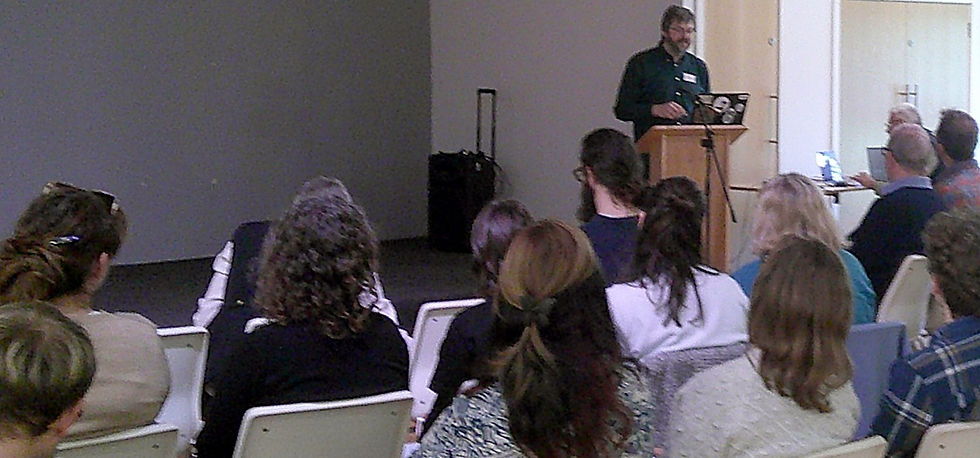
Working alongside Myerscough College, Lancashire Wildlife Trust and a group of farmer partners, MMU established a durable, collaborative platform to support wetter farming. The project prioritised peer-to-peer learning as a core engagement method and helped strengthen a regional identity around sustainable peatland farming in the North- West.
The role of trusted partners:

Trusted intermediaries played a critical role in OPENpeat’s success. Myerscough College, a well-established institution within the regional farming community, provided credibility, improved attendance through its farmer networks and helped reduce scepticism around paludiculture.
Farmer partners acted as peer ambassadors, sharing first-hand experiences of both opportunities and challenges. These peer-to-peer conversations consistently emerged as one of the strongest drivers of interest and confidence.
Lancashire Wildlife Trust contributed ecological expertise in peatland conservation alongside trusted relationships with land managers, ensuring environmental objectives were clearly communicated while remaining grounded in practical farming realities.
Outcomes:
OPENpeat delivered clear engagement outcomes:
• An active database of 50 fully engaged farmers
• A wider group of 100+ farmers open to updates and gradually building understanding
• Farmer-focused events attended by more than 200 farmers
MMU research assistant Lauryn McLoughlin reflects:
“Our work shows that North-West farmers are increasingly open to paludiculture when provided with clear information on economic and environmental benefits. Partnerships have enabled access to trusted local networks, harnessed farmer-to-farmer credibility and created a strong platform for ongoing engagement."
Challenges of partnership working:
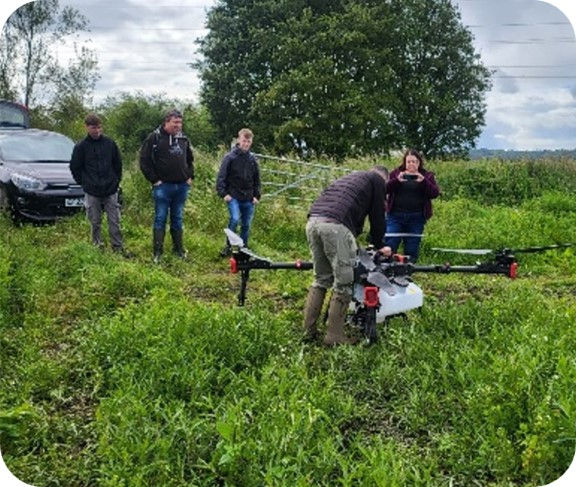
Alongside clear benefits, OPENpeat highlighted common challenges of collaboration. These included navigating differing partner priorities and ways of working, maintaining consistent messaging across academic, ecological and farming organisations, and ensuring farmer partners felt genuinely supported rather than ‘wheeled out’.
These experiences underline the need to invest time in relationship-building, set clear expectations and recognise the different pressures faced by partners from different sectors.
Collaboration beyond engagement: innovation and supply chains

Other PEF-funded projects demonstrated that collaboration is equally critical beyond farmer engagement, particularly when developing new crops, technologies and supply chains.
From peatland to product: ‘Boggy bulrushes to BioPuff®’
The ‘Boggy bulrushes to BioPuff®’ project shows how partnership working can drive innovation. Collaboration between Lancashire Wildlife Trust, landowner Peel L&P, farmer Steve Denneny and biomaterials start-up Ponda enabled the transformation of a former grass silage field into a Typha crop and the production of high-performance outdoor clothing using processed Typha seedheads.
LWT peat team scientific lead Mike Longden explains:
“Farmers are accustomed to using drainage to remove water. We’ve reversed that and worked together to develop ways of keeping water on the field and managing it. Only through collaboration have we been able to develop business cases, supply chains and move forward.”
He highlights collaborative problem-solving, such as adapting an old apple harvest trap dumper for use as a Typha harvester, as central to progress.
Whole-chain collaboration: lessons from FibreBroads

In Norfolk, the FibreBroads project, led by the Broads Authority, explored the potential for growing wetland crops such as Typha for use in sustainable, bio-based construction materials while restoring peatlands through rewetting.
The project brought together landowners, farmers, engineers, reedcutters and partners including Norfolk FWAG, ESG Natural Capital, Woolly Shepherd, Cranfield University and reedcutter Paul Eldridge.
Challenges around supply consistency, processing capacity, product specification, certification and investor confidence highlighted that collaboration must extend across the entire value chain.
“Bio-based construction is expanding rapidly, but innovations fail without whole-chain collaboration.” - Andrea Kelly, Environment Policy Office, Broads Authority.
When collaboration is harder: the Somerset experience

The ‘Taking Typha to scale on the Somerset Levels and Moors’ project further illustrates the importance of inclusive collaboration. Led by Will Barnard of FWAG SW, the project aimed to establish the commercial viability of paludiculture from crop establishment through to post-harvest processing.
While close working with farmers was essential, achieving this was not always straightforward:
“In Somerset we lack a collective sense of identity and shared vision. Getting farmers into the room is vital, but existing strategic partnerships tend to operate in spaces that unintentionally exclude them.” - Will Barnard, FWAG SW.
Despite these challenges, the project made significant progress by adapting existing machinery and methods, showing that Typha cultivation can be trialled quickly, cheaply and reversibly, reducing barriers to farmer uptake.
Landscape recovery – collaboration at scale
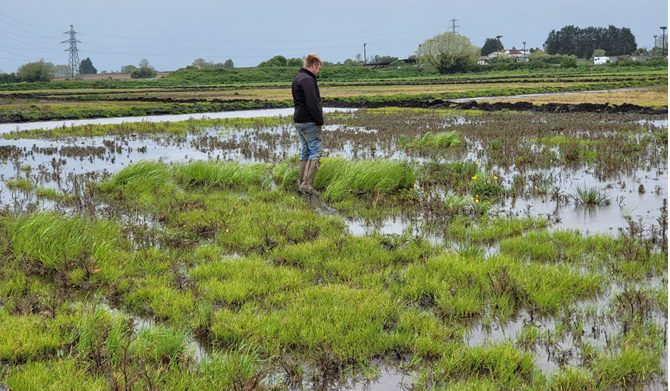
The Greater Sedgemoor Landscape Recovery Project highlights the importance of collaboration at landscape scale. The project aims to restore and enhance up to 5,000 hectares of low-lying floodplain grasslands and surrounding higher ground across the southern Somerset Levels and Moors.
Led by the RSPB and FWAG SW and supported through the Landscape Recovery scheme within Defra’s Environmental Land Management (ELM) programme, the project is working with 111 landowners and farmers across 1,602 land parcels covering 4,664 hectares. A two-year development phase, due to conclude in early 2026, is intended to lead into a 20-year implementation agreement.
A key priority has been ensuring that farmers and landowners play an active role in shaping the project’s direction. Building trust and fostering a sense of shared ownership has been central to developing a long-term landscape vision.
Will Barnard explains:
“Creating a landscape vision requires a broad understanding across many themes, but it is vital that farmers and landowners own the process and can reshape it as needed.”
Conclusions

Across the PEF portfolio, a consistent message emerges, partnership working is fundamental to the successful development of paludiculture. Trusted intermediaries, farmer-to-farmer learning and collaboration across the entire value chain enable innovation, build confidence and support uptake.
However, effective collaboration requires time, clarity and care. Aligning priorities, maintaining consistent messaging and ensuring farmers are meaningfully included remain ongoing challenges.
As paludiculture moves from exploration to wider adoption, the lessons from these projects provide a strong foundation for future programmes seeking to deliver environmental benefits alongside resilient, viable farming businesses.
Project Links
A pdf copy of the case study can be downloaded here


Comments