
Paludiculture on the Somerset Levels and Moors
The North West of England is home to significant areas of lowland peat, from the Chat Moss peatlands of Greater Manchester to the Lancashire Mosslands and beyond, the majority of these peatlands have been drained and converted to grade one agricultural land. Releasing large amounts of CO2 and other greenhouse gases, many of these areas are also proving increasingly difficult to farm productively under drainage based agricultural practices.
Paludiculture, also known as wetter farming, offers a potential solution for maintaining the profitable use of lowland peatland whilst significantly reducing the greenhouse gas emissions. By raising the water table to reinstate their natural wetland conditions, crops can be grown which thrive in these wetter conditions. This allows the land to remain productive, whilst protecting the remaining soil carbon and thus reducing greenhouse gas emissions from the land.
A number of different organisations, farmers and landowners are working together across the North West to test and trial different paludiculture practices, aiming to help provide answers to questions such as how to raise water tables, what can you grow, how you actually farm it, and can paludiculture be profitable.
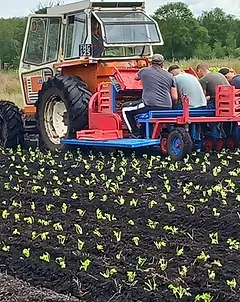.webp)
Planting celery at the Rindle wetter farming trial in Greater Manchester
Latest News and Blog

How do you harvest wetter farming crops? Meet Edna, our ‘Scrapheap Challenge’ bulrush harvester!
Image:
A.J.Critch Wildlife
29 Apr 2025
As part of our exciting wetter farming trials, we are growing a commercial crop of bulrushes on purposefully re-wetted agricultural peat fields. But how do you harvest crops in these wetter conditions?


Videos


Projects
Boggy bulrushes to BioPuff
One of the first field-scale trial of growing a typha crop on re-wet agricultural peat. The seed heads will be harvested and a market has already been secured for these with company Ponda to create BioPuff®, a revolutionary sustainable and eco-friendly replacement for the use of synthetic fibres or goose feather down in padded jackets.
Publications

Lowland agricultural peat characteristics which influence water quality and peat hydrology
A major Environment Agency research programme has revealed that rewetting agricultural peat is far more complex than simply raising ditch water levels. Drawing on hydrology, water-quality and field-monitoring studies, the LP3+ project highlights how climate, drainage design, peat condition and water availability all shape the success of peatland restoration and paludiculture.
Environment Agency
2026
The germination of Typha species: Implications for paludiculture
The report reviews existing literature on Typha (cattail) germination and identifies key ecological factors influencing its reproduction, with direct implications for its use as a paludiculture crop. Typha species produce extremely large quantities of viable seeds that disperse widely and form persistent seed banks, enabling rapid colonisation of rewetted peatlands.
Greifswald Mire Centre
2021

Paludiculture
The Savills & Vitagrasss Farms (Holker) Ltd paludiculture report highlights the strong potential of wetter farming systems, backed by practical, on‑farm insights. Its value lies in real trial lessons, clear guidance on soil and water preparation, and a focused review of the wetland crops most likely to succeed commercially.
Savills & Holker Estate
2026

Environmental Improvement Plan 2025
The UK government’s Environmental Improvement Plan (EIP) 2025 sets out an ambitious vision: restore nature, clean up air and water, tackle climate change, and ensure everyone can enjoy the benefits of a thriving environment. This isn’t just about conservation—it’s about building resilience, boosting health, and driving economic growth.
UK Government
2025


