

Project partners

Project Overview
The overall goal and vision for this project is to overcome the barriers to paludiculture. The project explores the options that need to be considered to produce a business case. On production of the business case, a small-scale trial site will explore a recommended paludiculture option.
Background
Vitagrass Farms (Holker) Ltd is a predominantly arable farm located on a continuous block of fertile, low-lying land adjacent to a 982-acre Lowland Raised Bog—designated as a Special Area of Conservation (SAC), Site of Special Scientific Interest (SSSI), and National Nature Reserve (NNR). The farm’s soils are classified as deep peat, with naturally high groundwater and a peaty surface, making it an ideal candidate for exploring paludiculture—the cultivation of crops on wet peatlands.
As part of the Agricultural Transition, Vitagrass Farms, in collaboration with Savills, undertook a research project funded by the Paludiculture Exploration Fund (PEF). The aim was to explore environmentally sustainable land management practices that could deliver public goods while maintaining commercial viability. Holker Estate was well positioned to explore this opportunity, providing answers to many of the barriers faced by new entrants, including the Estate’s tenant farmers and wider land managers.
Phase 1 Summary: Research & Feasibility
Objectives
-
Develop a farmer-focused business case for paludiculture.
-
Conduct a small-scale crop trial to assess establishment success.
-
Disseminate findings to stakeholders through events and publications.
Key Activities & Findings
A comprehensive literature review of 123 plant species was conducted, narrowing down to six “champion crops” based on 17 evaluation parameters, including market potential, agronomic feasibility, machinery compatibility, and local suitability.
Top-scoring crops:
-
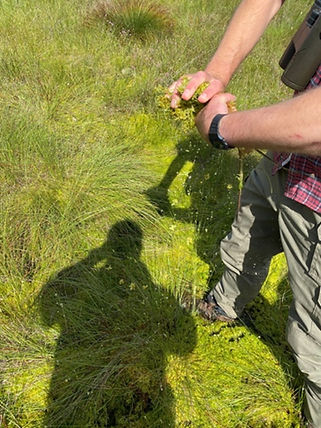
Sphagnum moss (72%) – potential for horticulture and restoration.
-
Typha (bulrush) for fibre (72%) – potential for textiles and insulation.
-
Typha (bulrush) for biomass (61%) – potential for energy and dual-use.
Challenges Identified
-
No crop has an established commercial market or agronomic system, making production high-risk with an estimated ROI below 10%.
-
Barriers include:
-
Lack of market infrastructure and processing technology.
-
Unclear legislative framework for wetland farming.
-
Site-specific challenges such as high nutrient levels and elevated pH, which may hinder crop establishment.
Social value:
Paludiculture offers potential for biodiversity enhancement, carbon sequestration, and community engagement, but requires further evaluation.
Dissemination & Recognition

The Holker Estate received the Cumbria Farmer Awards 2025 Environmental and Sustainability Award for its work in paludiculture


Phase 2: Extension Project – 2025/26
Following the success of Phase 1, the project has been extended to build on initial findings and address key knowledge gaps.
Ground Truthing
A detailed site assessment is being conducted to evaluate:
-
Soil and water conditions: Nutrient levels, pH, and hydrology.
-
Machinery and infrastructure: Suitability for wetland crop cultivation.
-
Water management: Ensuring a consistent supply and understanding implications for third parties and statutory conditions.
-
Pest control and fencing: Assessing risks and mitigation strategies.
This phase will provide a replicable framework for other farms considering paludiculture and help identify site-specific constraints.
Crop Trial
The proposed 2024 trial was deferred to allow for more robust ground truthing. A new trial is now planned for 2025/2026 using statistically replicated randomised plots to:
-
Test the establishment success of the preferred crop (likely sphagnum or an appropriate Typha species).
-
Monitor pest damage and competition from other species.
-
Evaluate yield potential and management requirements.
This trial will generate reliable data to inform future commercial decisions and contribute to wider industry knowledge.
Dissemination & Outreach
To promote paludiculture and share findings:
-
A summary booklet is being developed to outline key insights and recommendations.
-
A series of newsletters, podcasts, and workshops will be launched to engage farmers, land managers, and stakeholders.
-
Continued collaboration with academic institutions and restoration sites will support knowledge exchange.
Strategic Alignment
This extension project aligns with several goals of the UK Peatland Strategy 2018–2040, including:
-
Promoting sustainable land use.
-
Enhancing climate mitigation through peatland preservation.
-
Supporting knowledge sharing and innovation in land management.
Conclusion
The paludiculture project at Vitagrass Farms is a well-established initiative focused on developing sustainable and economically viable farming practices on peat soils. With Phase one completed and the extension project now underway, the farm is uniquely positioned to generate valuable insights for the emerging bioeconomy and to support the transition toward climate-resilient agriculture.

